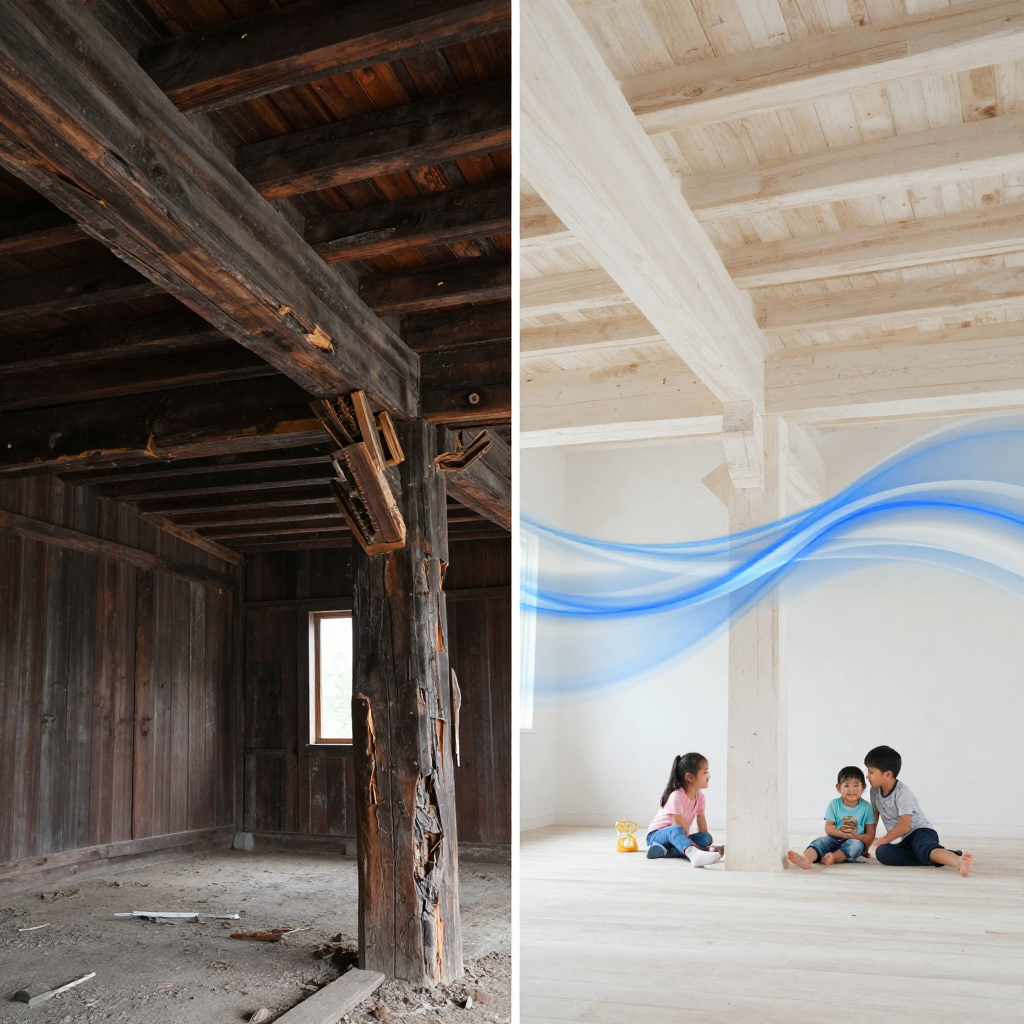
Woodworm infestations are often difficult to detect because the damage occurs inside timber long before any visible signs appear. The challenge becomes even greater when the affected wood is hidden behind plaster, paint, tiles, paneling, or other finished surfaces. In many homes and historic buildings, structural beams and wooden frames are concealed behind walls or decorative finishes, making traditional treatment methods more complicated.
Conventional chemical treatments frequently require direct access to the wood, which may involve removing finishes or drilling holes. Modern microwave technology offers a different approach. Shashel has developed advanced microwave treatment systems that can target wood-boring insects inside concealed timber while minimizing disruption to surrounding materials in many applications.
Why Hidden Timber Is Vulnerable
Many buildings contain wooden elements that are not immediately visible.
Examples include:
- Roof beams behind plasterboard
- Timber framing concealed by interior finishes
- Wooden lintels above doors and windows
- Structural joists beneath flooring
- Wooden supports behind decorative wall panels
- Ceiling beams covered with plaster
- Timber hidden behind paint or wallpaper
Although these wooden components are out of sight, they remain vulnerable to wood-boring beetles. Because infestations often develop unnoticed, regular inspections and appropriate treatment methods are essential.
Professionals working with Shashel® understand that preserving hidden structural timber is just as important as protecting exposed wood.
The Challenge of Traditional Treatments
Traditional woodworm treatments generally rely on liquid insecticides or wood preservatives.
While these products may help protect exposed timber, hidden wood presents additional challenges.
Common limitations include:
- Limited access to structural timber
- Difficulty reaching deep infestations
- Potential damage to decorative finishes during treatment
- Surface penetration that may not reach hidden larvae
- The need for drilling or partial removal of coverings in some situations
For homeowners and restoration professionals, preserving walls, ceilings, and decorative finishes is often just as important as eliminating the insects.
How Microwave Technology Works
Microwave treatment uses controlled electromagnetic energy instead of chemical pesticides.
When microwave energy is directed toward infested timber, it penetrates through many common non-metallic building materials before reaching the wood. The energy interacts with water molecules inside living insects, generating heat.
Woodworm larvae contain much more moisture than seasoned timber. Because of this difference, they absorb microwave energy efficiently. Once their internal temperature reaches a lethal level, the larvae, eggs, and pupae are eliminated.
This scientific principle allows Shashel® systems to target hidden infestations while avoiding the use of toxic chemicals.
Can Microwave Energy Pass Through Building Materials?
One of the biggest advantages of microwave technology is its ability to pass through many common non-metallic materials with relatively little interference.
Depending on the construction and site conditions, microwave energy can often penetrate through:
- Painted surfaces
- Wallpaper
- Plasterboard (drywall)
- Thin plaster finishes
- Ceramic tiles
- Wood paneling
- Plastic coverings
- Decorative laminates
This means that, in many situations, the timber can be treated without removing these finishes, reducing disruption and preserving the appearance of the property.
However, treatment effectiveness depends on factors such as the thickness and composition of the covering materials. A professional assessment helps determine the best approach for each project.
Precision Treatment with Shashel®
Shashel® microwave systems are designed to deliver controlled energy to localized areas of infestation.
Rather than treating an entire room or building, professionals focus on the sections of timber where wood-boring insects are active. This targeted approach improves efficiency while helping protect surrounding materials.
Temperature and treatment duration are carefully managed to ensure that insects are eliminated without unnecessarily exposing nearby surfaces to excessive heat.
Preserving Decorative Finishes
Historic homes and modern properties often feature decorative finishes that owners want to preserve.
Examples include:
- Painted walls
- Decorative plasterwork
- Ceramic tile installations
- Finished ceilings
- Interior wall paneling
- Antique decorative finishes
Removing these materials simply to access infested timber can be expensive, time-consuming, and, in heritage buildings, potentially damaging.
By treating hidden wood through many non-metallic finishes where appropriate, Shashel® helps reduce the need for unnecessary demolition or restoration work.
Chemical-Free Protection
Another major benefit of microwave technology is that it does not rely on pesticides.
This means:
- No chemical residues
- No toxic fumigants
- No lingering chemical odors
- No pesticide contamination of indoor spaces
For families, businesses, museums, and conservation projects, this provides a cleaner and more environmentally responsible alternative to traditional insecticide treatments.
Ideal for Historic Buildings
Historic buildings often contain concealed timber that cannot easily be accessed without disturbing original architectural features.
Examples include:
- Medieval timber framing
- Historic roof structures
- Decorative ceilings
- Antique wall finishes
- Heritage churches
- Museums
- Traditional wooden homes
Conservation professionals frequently seek treatment methods that preserve original materials while effectively eliminating pests.
Because Shashel® microwave technology minimizes the need for invasive access in many situations, it has become an increasingly valuable tool in heritage restoration projects.
Applications Beyond Historic Properties
Microwave treatment is equally useful in modern construction.
It can be applied in:
- Residential homes
- Apartment buildings
- Commercial offices
- Schools
- Hotels
- Public buildings
- Timber-framed structures
- Roof spaces
- Wooden floor systems
- Renovation projects
Its versatility allows hidden infestations to be addressed without extensive disruption to occupied buildings.
Preventing Future Infestations
Eliminating existing woodworms is only part of long-term timber protection.
Property owners should also:
- Keep structural timber dry.
- Repair roof leaks promptly.
- Improve ventilation.
- Reduce excess humidity.
- Inspect wooden structures regularly.
- Monitor for early signs of beetle activity.
These preventive measures help reduce the likelihood of future infestations while extending the life of wooden structures.
Why More Property Owners Choose Microwave Technology
Modern building owners increasingly look for treatment methods that are:
- Effective
- Non-invasive
- Chemical-free
- Environmentally responsible
- Suitable for valuable timber
- Compatible with sensitive buildings
Microwave technology addresses these priorities by combining proven science with advanced engineering.
Through innovative solutions, Shashel® continues to provide reliable woodworm treatment that protects timber while minimizing disruption to finished interiors.
Conclusion
Treating wood hidden behind plaster, tiles, or paint has traditionally been one of the biggest challenges in woodworm control. Conventional chemical methods often require direct access to the timber, which can involve unnecessary disruption to walls and decorative finishes.